
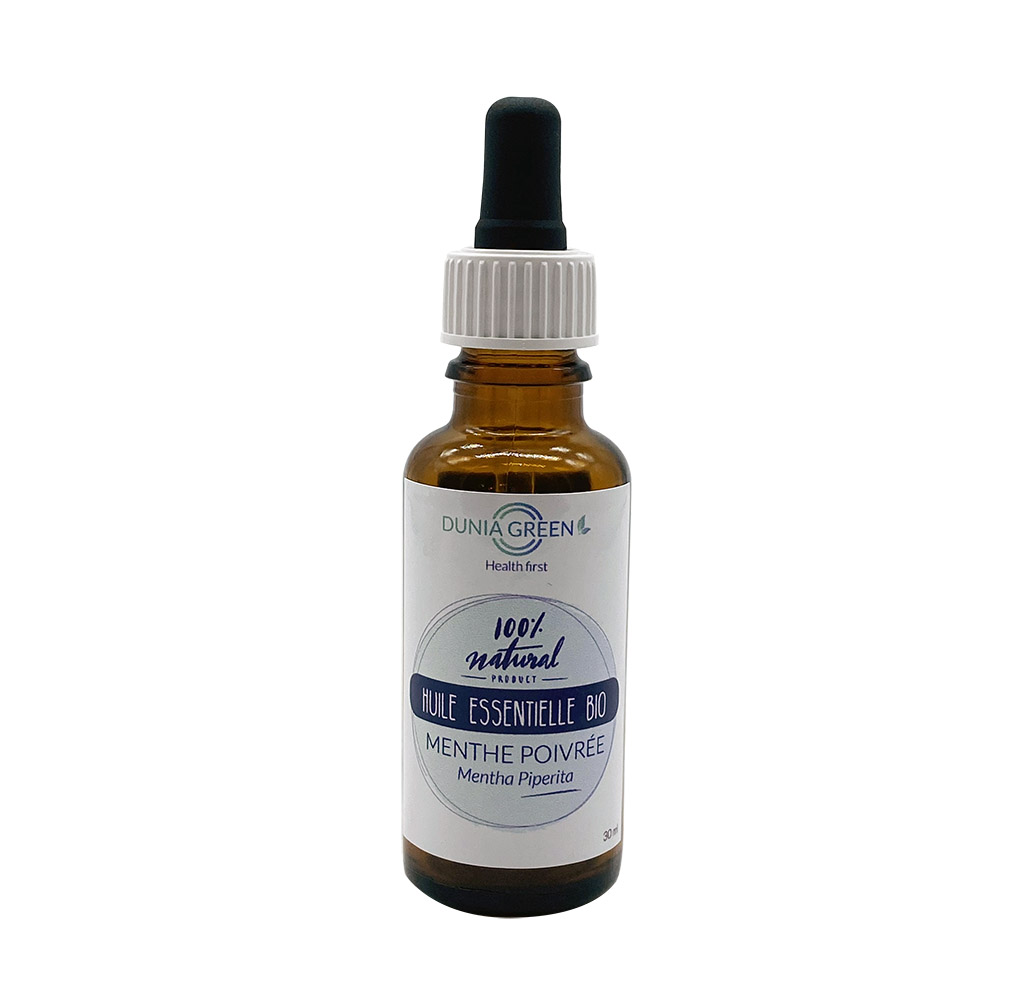
Description
Used since ancient times, peppermint is valued for its digestive benefits but also for its effects against stress, colds and heavy legs. This plant is tonic, stimulating, detoxifying and its essential oil is effective against pain. Peppermint essential oil is produced from the steam distillation of the leaves of the plant. It has an extremely refreshing effect. Its richness in menthol makes it a very popular oil in aromatherapy and herbal medicine.
BIOCHEMICAL COMPOSITION
- Menthol: 30-55%
- Menthone: 14-32%
- Other ingredients: limonene, 1,8 cineole, isomenthone, menthyl acetate, carvone, menthofuran (<9%), pulegone (<4%).
PRODUCTION AND PERFORMANCE
Properties of Peppermint Essential Oil
- Analgesic and anesthetic: the menthol and menthone contained in this essential oil cause a feeling of cold which is very useful for calming muscle pain, blows, headaches, etc. It also acts against nausea and vomiting.
- Detoxifying, tonic and stimulating: cardiotonic and neurotonic, peppermint stimulates the body and the mind, improving concentration. It is therefore the ideal essential oil for the morning after evening and difficult mornings.
- Antiviral: Peppermint is effective against some viruses, especially those that carry herpes.
- Anti-inflammatory: Peppermint EO also acts on respiratory and intestinal inflammation.
- Digestive, antispasmodic and antibacterial: it is effective against digestive spasms and intestinal inflammation. On the other hand, it plays an antibacterial role, especially in the digestive sphere.
Indications of Peppermint Essential Oil
Peppermint Essential Oil is indicated in the management:
- gastrointestinal disturbances: nausea, bloating, difficult digestion, gastroesophageal reflux disease, abdominal pain, cramps and heartburn, irritable bowel syndrome, bad breath (halitosis)
- headaches and migraines
- nasal congestion (stuffy nose)
- urinary stones (lithiasis)
- motion sickness
- arthritis
- menstrual cycle problems (painful periods)
- cardiovascular problems and blood circulation problems (hypotension, heavy legs)
- skin diseases (acne, eczema) and allergic reactions (hives)
- fatigue, stress and mental disorders (anxiety, depression, difficulty concentrating)
- contusions and insect bites.
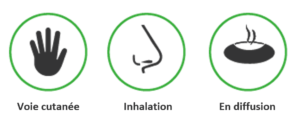
Routes of administration in aromatherapy
Precautions for use
- Wash hands before and after using essential oils.
- Not for use by pregnant women.
- Breast-feeding women, ask your doctor for advice.
- Do not use in babies and children under 7 years old.
Keep bottles of essential oils out of the reach of children. Observe the precautions for use of essential oils.
It is also not recommended for people suffering from epileptic, hepatic or cardiovascular disorders (unless medical advice to the contrary).
If you choose the skin application and want to do it over a large area, we recommend that you dilute it to 30% in vegetable oil. If you prefer to use it orally, be sure to stick to the dosage.
Take care to avoid contact with the eyes, and never apply this essential oil on a lesion (wound, scratch, etc.)
Storage: store your bottle in a dark place and close the cap tightly.
For any use of essential oils for therapeutic purposes, consult a doctor. Prefer cutaneous use or by diffusion and inhalation, rather than the oral route.
Cinnamon leaf is hepatotoxic in high or repeated doses.
People prone to hypertension and / or suffering from liver problems should consult a specialist or avoid its use.
Product Features

Reviews
There are no reviews yet.